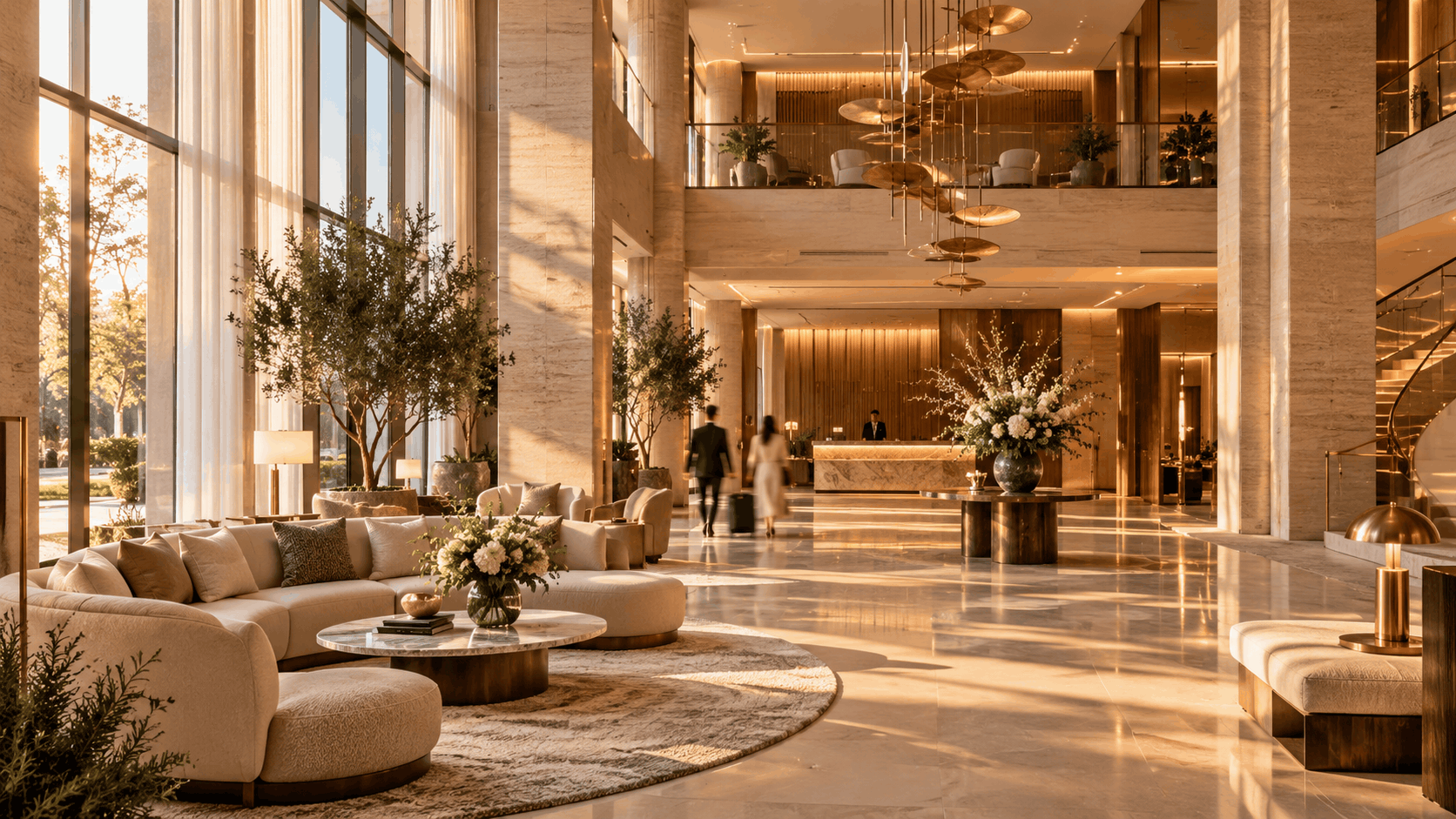
Digital solutions for hotels help simplify day-to-day operations and give staff more time to focus on guests. They make it possible to update information without repeated printing, schedule communications in advance and reach guests where they need it.
A new dish has been added to the buffet, but the label beside it still shows the previous one. A conference has moved to a different room, and guests are asking for directions. Reception is handling arrivals and answering questions about the spa, while someone needs to print new signage for the evening event.
If you work in a hotel, these situations probably sound familiar. Individually, they may seem minor. But when they happen every day, they take up time your team needs to focus on guests.
Let’s walk through a typical hotel day and see how our solutions can help you manage these situations more easily.
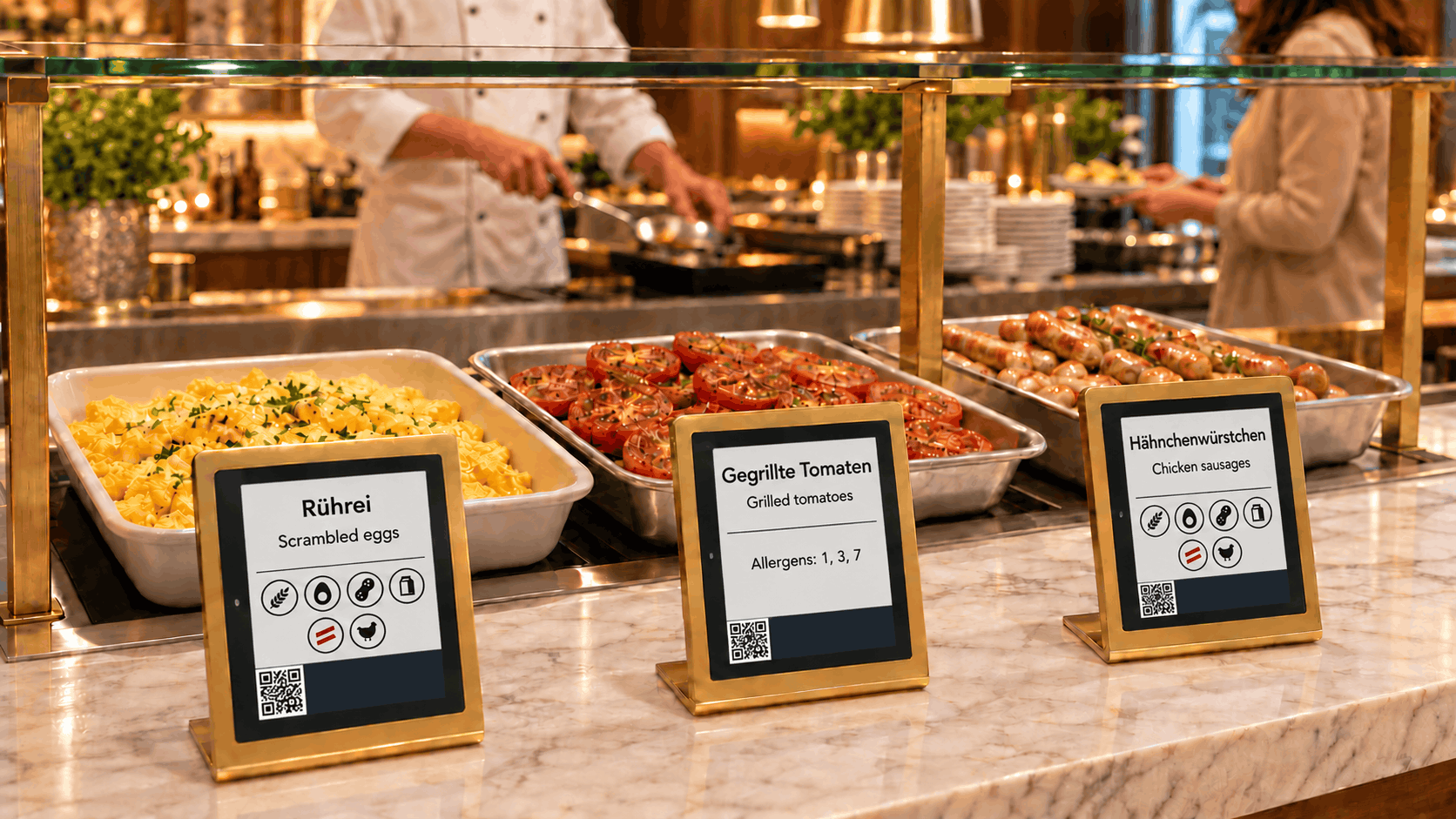
Breakfast is just getting started, but the kitchen is already adjusting the menu. One cake replaces another, gluten-free bread is added, or a side dish changes. Staff need to ensure that each dish is labelled with the correct name and allergen information.
With paper labels, this means finding the template, editing the text, printing it and replacing the label. During the breakfast rush, however, there is always something more urgent to deal with.
Digital buffet labels allow staff to update dish information without reprinting. With UNITY INTEGRA’s Dish Management module, authorised staff can manage dish names, allergens and language versions through a web application accessible on mobile devices.
When the menu changes, they update the content on the relevant label. The hotel can then use the same devices for lunch, conference catering or an evening event.
Updates take just a few minutes, without printing or replacing paper labels. This saves time whenever the menu changes and helps reduce errors in dish labelling and allergen information.
The organiser needs a larger room, so the morning training session moves to a different conference room. The change is confirmed, and the space is ready. But the original schedule is still displayed on the door, and an outdated arrow by the lift points attendees in the wrong direction.
The first guests arrive at reception to ask where they should go.
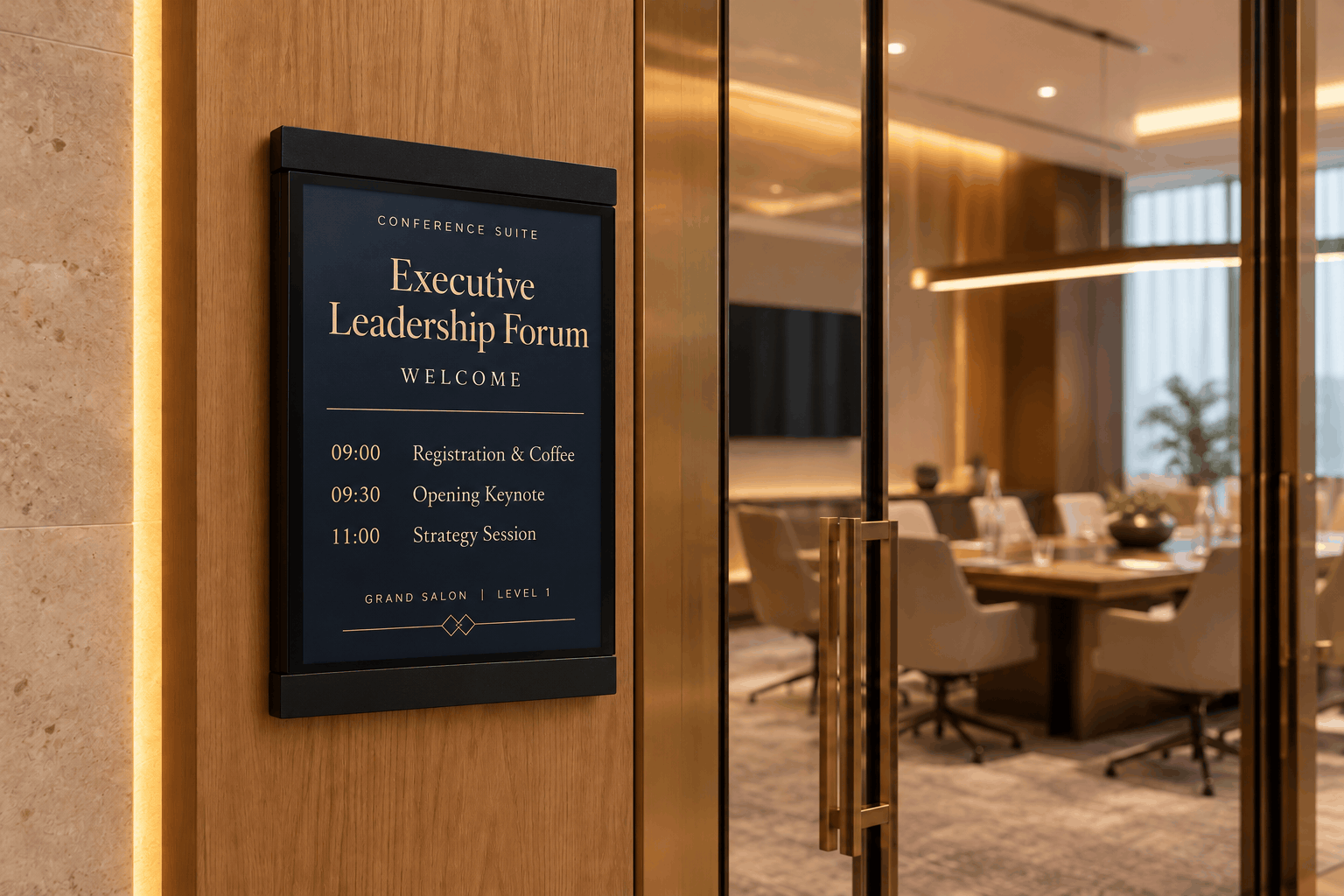
eBoard digital conference room signage allows staff to update event names, times and other information centrally. When connected to a supported booking system, the displays can show information directly from room bookings.
Directional signage can be updated in the same way. Battery-powered ePosters also make it possible to display information where no power supply is available, such as on glass walls outside conference rooms.
When the schedule changes, your team no longer needs to walk around the hotel replacing printed signs. Attendees can find their way more easily, and the organiser has one less thing to worry about.
What time does breakfast finish? Where is the spa? Can we book a massage? And where would you recommend for dinner?
For each guest, it is a new question. The receptionist may be answering it for the tenth time that morning, while other guests wait.
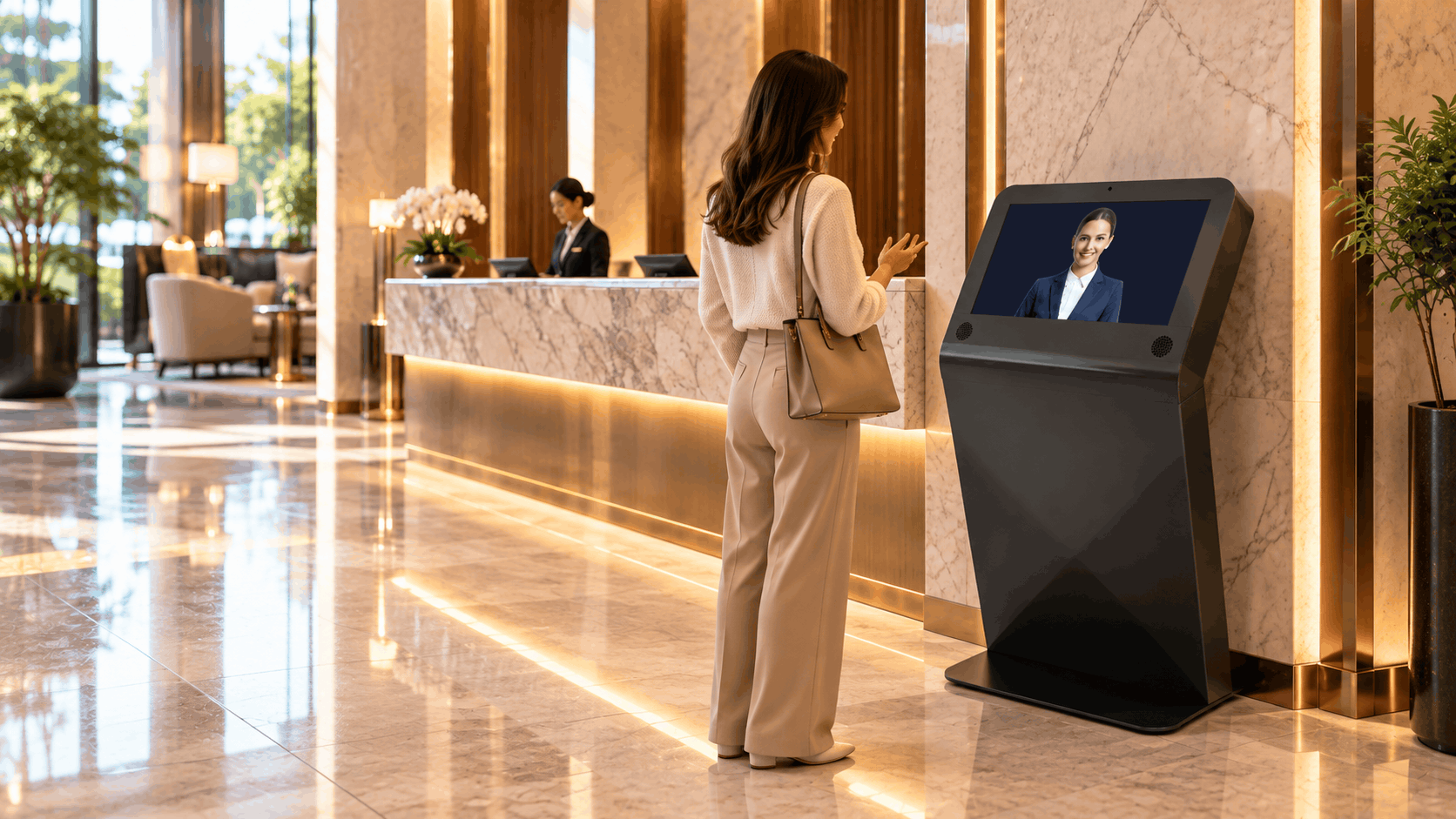
A digital concierge can handle some of these routine enquiries. It is an AI assistant that communicates by voice in multiple languages and provides information based on content prepared by the hotel.
Guests can interact with it on a display at the hotel or through a web browser on their phones. They can check spa opening hours, parking options or the restaurant menu, for example. The assistant can also introduce services guests may not yet know about.
Depending on the agreed integrations, its functionality can extend to supporting bookings, passing on guest requests or assisting with selected steps during check-in and check-out.
This gives reception staff more time for personal welcomes, individual requests and situations where an experienced team member is essential.
A guest returns from the city and considers how to spend the afternoon. They might enjoy a massage or stay for dinner at the hotel restaurant. But first, they need to know what is available.
If the breakfast offer is still displayed by the lift, the hotel misses an opportunity to promote something relevant.
ePosters and Digital Signage help tailor communications to what is happening at the hotel. With ePoster Planner, you can schedule content by time and display zone.
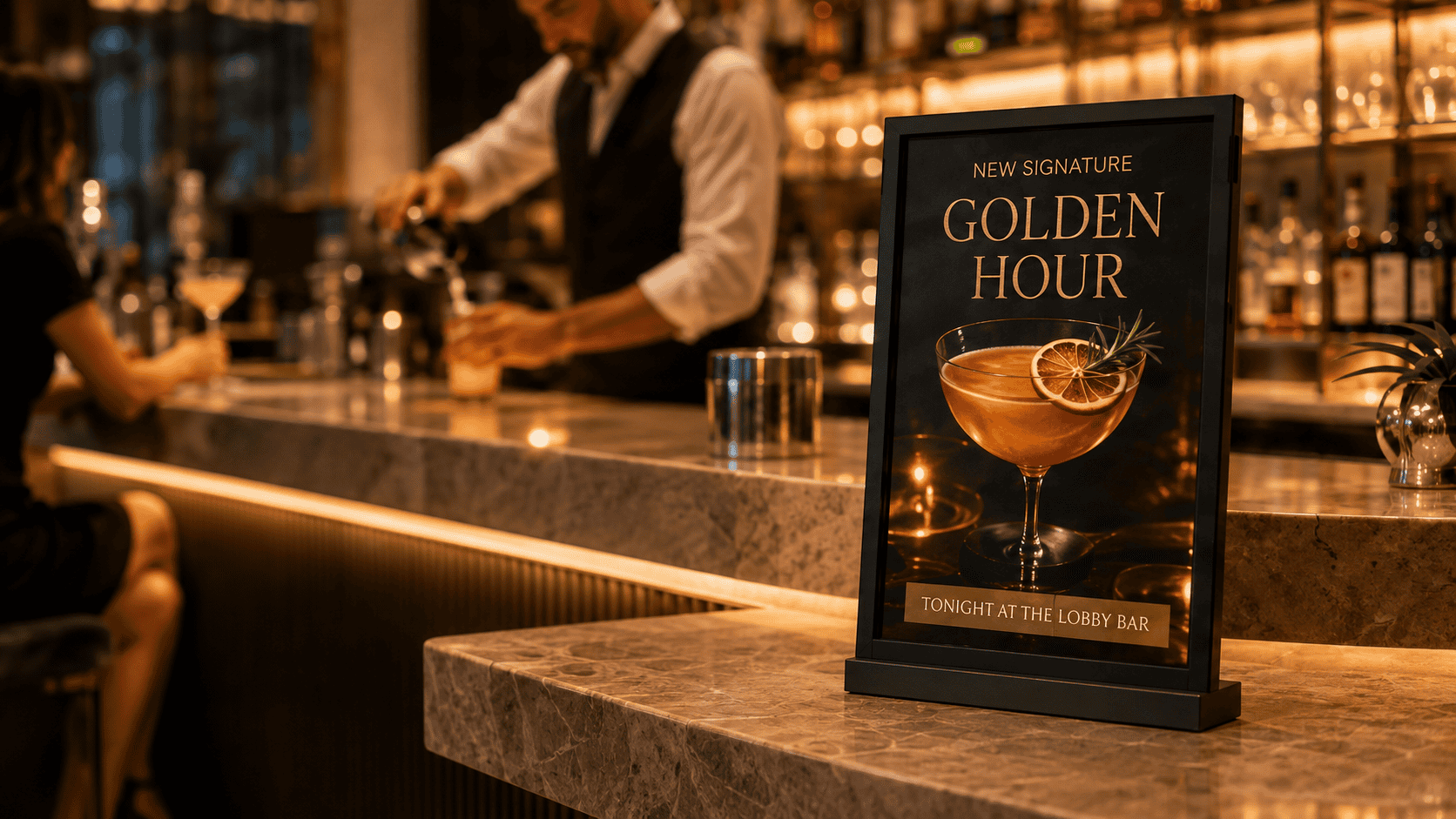
In the morning, promote the evening menu near the restaurant. In the afternoon, highlight spa services in the lobby and display the event programme near the conference rooms. In the evening, give the bar’s latest offers their turn.
An e-paper poster is ideal for static content such as offers, menus and announcements. Battery-powered models can be placed where there is no power socket nearby. For video or dynamic content, you can use Digital Signage displays.
The marketing team prepares communications in advance, and staff no longer need to replace posters throughout the day. Hotel offers reach guests at a time and place where they are likely to catch their attention.
A guest chooses a drink based on the shelf price, but the cashier charges a different amount at checkout. The difference may be small, but explaining it is uncomfortable for both sides.
When staff replace price labels manually, situations like this can easily happen, especially when the team responsible for the shop also handles other duties.
Electronic shelf labels (ESL) allow staff to manage prices and product information centrally. Once you connect them to the point-of-sale system, they can receive data from an agreed source, reducing the need for manual updates across separate systems.
Hotels can use them in shops, other retail areas or grab-and-go zones. Alongside regular prices, they can also display seasonal offers and selected promotions.
When designing the solution, define where the data comes from and how your team checks updates. A properly configured integration helps reduce discrepancies between the price guests see beside a product and the amount they pay at checkout.
Two more guests have been added, a partner needs their seats moved, and the organiser sends over the final changes. Meanwhile, the team is finishing the room setup. Every paper place card that needs replacing adds another task to the list.
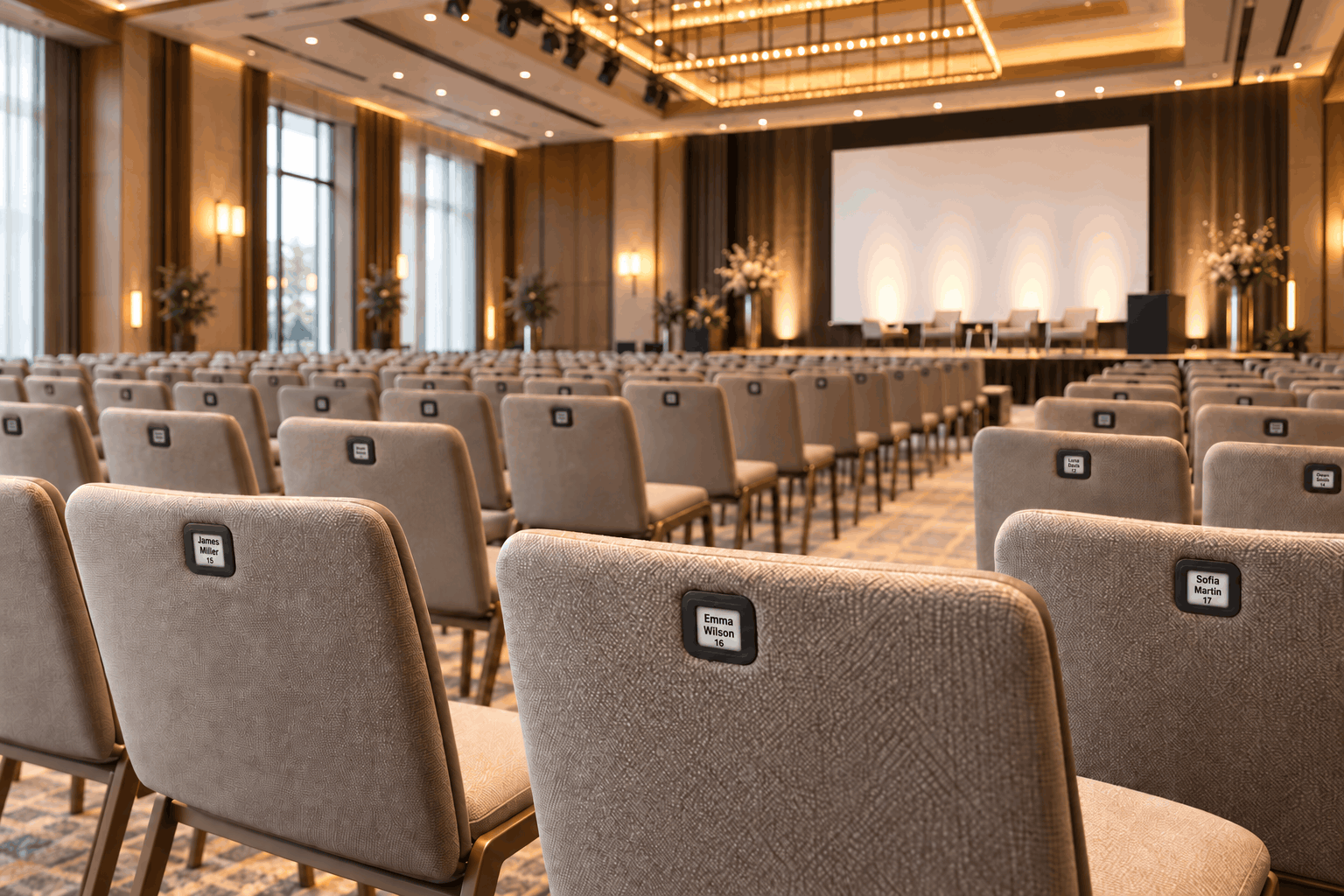
ChairTrack allows you to update labels directly on chairs remotely. From one central location, you can change guest names, seat numbers and sponsor logos. Easily identify VIP seats, reserved seating or spaces designated for guests with reduced mobility.
Mapping the seating layout with a scanner also helps during setup. The team can assign labels to specific seats and then update their content without having to visit each chair.
The result is faster room setup, time saved on last-minute changes and fewer seating labelling errors. After the event, the same displays can be reused with new names, seat numbers and branding for the next organiser.
How can you manage cleaning in shared spaces, service during events and the transport of supplies with your available staff? Robots can take on repetitive and physically demanding tasks, freeing up your team to focus on guests.
Autonomous cleaning robots handle regular floor cleaning in lobbies, corridors and dining areas. Service robots help deliver food and collect used dishes, particularly during the breakfast rush, conferences and catering events.
Transport robots help move heavier loads between different areas of the hotel. Supplies, linen and event equipment can be transported from storage to where they are needed, reducing physical strain on staff and the need for repeated manual carrying.
For hotels, this means more efficient use of staff time, less physical strain and additional support during busy periods. The choice of equipment and how it is deployed are tailored to your hotel’s spaces, transport routes and daily operations.
Adding new technology raises a natural question: will staff need to learn another application and take on more tasks?
ESL Manager by UNITY INTEGRA runs on the AIMS platform and combines modules for different operational needs. Dish Management handles food labelling. ePoster Planner schedules campaign content. Other modules cover event seating labels and facility management.
We select the modules to match your hotel’s needs. We also assess integration options for the digital concierge, access control systems and other technologies individually.
The goal is simple: staff know where to update information and avoid entering the same details in several places.
Start by choosing one recurring task that takes up the most of your team’s time.
It might be preparing breakfast buffet labels, replacing schedules before a conference or updating offers in shared spaces. Identify who handles it, how often it needs doing and how long it takes.
Then trial a solution in one area and compare the results with your current process. Track measures such as buffet setup time, the number of manual label changes or the time and effort needed to prepare for a conference. When promoting services, also monitor whether guest interest in specific offers changes.
This gives you a practical basis for deciding where to expand next.
Which everyday task would you like to simplify at your hotel?
At UNITY INTEGRA, we will review the process with you and recommend a suitable solution, from devices and content management to integration options for your existing systems.
Want to explore how digital solutions for hotels could work at your property? Contact us.
No. You can start with a single buffet, conference area or hotel shop. Further expansion can be planned based on your operational experience. The advantage is a single, centralised system that you can gradually extend with additional modules.
Yes. The system can display information in two languages, alongside allergens shown as icons or numbers. The amount of content and its layout are adapted to the display size to keep information clear and easy for guests to read.
Battery-powered e-paper labels and ePosters require no power or data cables. Content is updated wirelessly through a secure system designed to protect the communication infrastructure against unauthorised external access. This allows flexible placement anywhere within the network’s coverage.
Integration options depend on the specific system and its available interfaces. Electronic shelf labels can receive data from a point-of-sale system, while room signage can use information from a supported booking system. The scope of integration is verified before implementation.
Yes. It can introduce guests to the restaurant, spa and other services, and guide them through the entire purchase process, including online payment for services or products. Depending on the integration, it can also support booking a specific time slot, check-in with automatic data capture from identity documents using optical character recognition (OCR), and check-out with online payment.